
September 10, 2026
A New Ceiling Stain After the Storms: Roof, AC, or Pipe?
By Chris Johnston, Founder, WaterDamageIQ
The short version
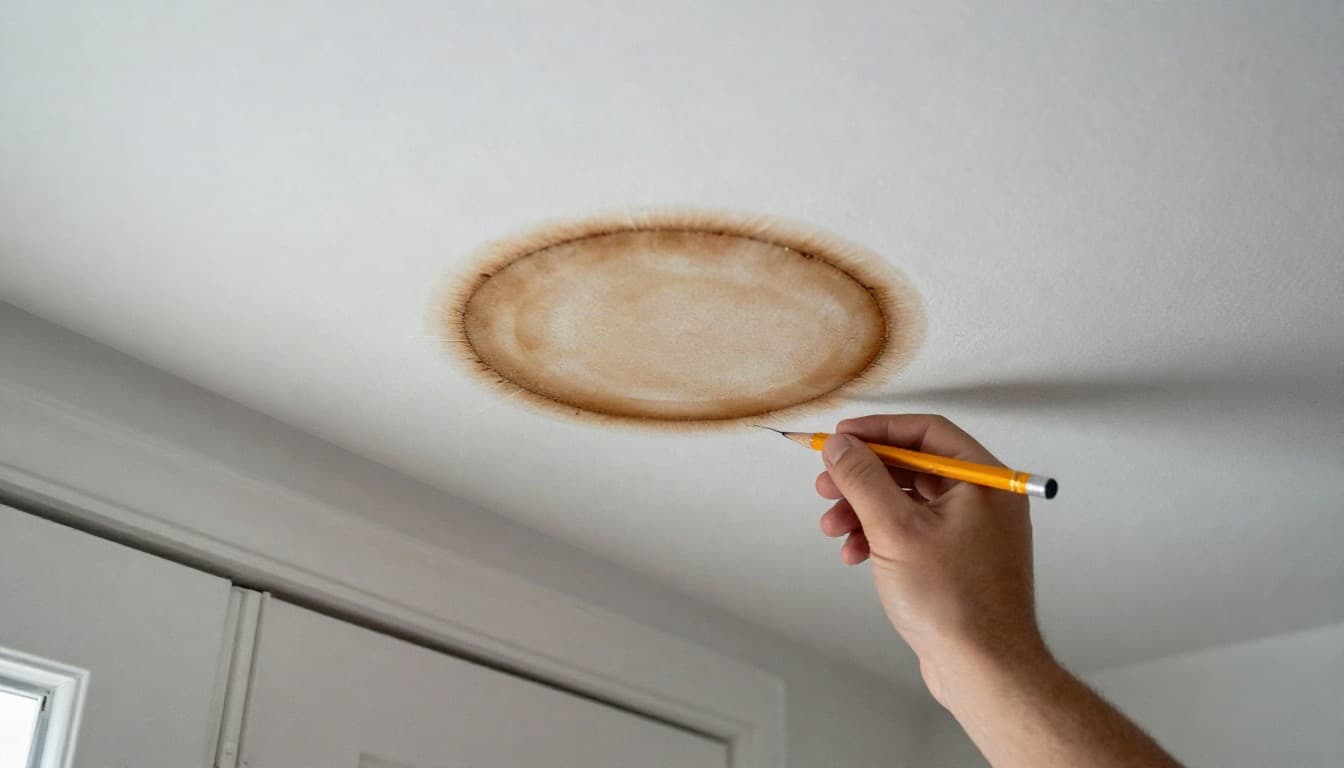
Today, September 10, is the statistical peak of hurricane season, and for much of South Florida it comes right after the first long run of heavy rain in months. On September 3, severe drought still covered most of Broward and all of Miami-Dade, and forecasters called for 2 to 4 inches and possible flash flooding through Labor Day. If a stain showed up on your ceiling this week, the pattern usually points to the source. A stain that grows during rain and stops between storms points to the roof, flashing, or a window. A stain near the air handler that grows on hot, dry days points to the AC condensate drain. A stain that grows no matter the weather points to plumbing. Photograph it, mark its edge with a pencil, and find the source before you paint. Florida gives you one year to report a property claim, and the insurer then has 60 days to pay or deny.
Why this week
The National Hurricane Center puts the peak of the Atlantic hurricane season on September 10. That is today. For much of South Florida, it lands right after the first long stretch of heavy rain in months.
On September 3, the National Weather Service's drought statement still showed severe drought across most of Broward and all of Miami-Dade, and moderate drought in metro Palm Beach. Going into the holiday, WSVN forecast widespread totals of 2 to 4 inches, with isolated totals much higher, and said flash flooding could happen any day through Labor Day weekend.
Our inference from that: roofs, flashing, and window seals that had not been tested by a long rain since spring just were. If you looked up this week and found a brown ring on the ceiling, you are not alone, and the season runs through November. Fix it now, while it is a stain and not a sagging ceiling.
First, mark it
Before you do anything else, take a dated photo of the stain with something for scale. Then trace its edge lightly with a pencil and write the date and time next to it. Check it again after the next rain and the next hot afternoon. Whether the stain grows, and when, is the best clue you have.
Reading the stain
These are patterns, not diagnoses. A roofer, HVAC tech, or plumber confirms the source. But the pattern tells you which one to call first.
- Grows during rain, stops between storms: roof or flashing. Often near a chimney, plumbing vent, skylight, or where two roof slopes meet. Water can travel along a rafter before it drips, so the stain is not always directly under the hole.
- On the wall or ceiling near a window corner, after wind-driven rain: the window. Failed caulk, a cracked frame, or blocked weep holes. Look for staining or peeling paint on the wall below the window too.
- Near the air handler, grows on hot afternoons: the AC condensate drain. Your air conditioner pulls water out of the air all day, and in a Florida September that is a lot of water. If the drain line clogs, the pan overflows. The EPA says to keep drip pans clean and drain lines “unobstructed and flowing properly.” Open the air handler closet or attic hatch and look at the pan.
- Grows no matter the weather: plumbing. A supply line, a drain, a toilet seal, or a shower pan above. Turn off every faucet and water-using appliance and watch the water meter. If it keeps moving, water is going somewhere it should not.
- Dark spots or a musty smell around it: the area has likely been wet for a while. That is an observation, not a mold test. Do not scrape or sand it. Get it assessed.
The AC drain is the one you can often fix yourself
Allison Bailes, writing for Green Building Advisor, notes that algae grows in condensate lines, and that a wet-dry shop vac sealed to the outside end of the line can pull out the clog. He suggests asking an HVAC company for an algaecide made for air conditioners, and he is direct about one thing: “Don't use bleach! It can cause a host of problems.”
If water has already overflowed into the ceiling, turn the AC off at the thermostat until the line is clear, and get the wet drywall and insulation dried. The EPA says water-damaged areas should be dried within 24 to 48 hours to prevent mold growth, and indoor humidity kept below 60 percent, ideally between 30 and 50.
Don't paint over it yet
Stain-blocking primer is cheap and tempting. Hold off. Paint hides the evidence your insurer and contractor will want to see, and it does nothing about the water above. Fix the source, confirm the ceiling and insulation are dry, then paint.
Your rights on roofs and claims
A leak sends a lot of Florida homeowners straight to one worry: will my insurer drop me over the roof? Florida Statute 627.7011 sets limits:
- Roof under 15 years old: an insurer “may not refuse to issue or refuse to renew” a homeowners policy solely because of the age of the roof.
- Roof 15 years or older: before requiring replacement, the insurer must let you have it inspected, at your cost. If the inspection finds 5 or more years of useful life left, the insurer may not refuse to issue or renew solely because of roof age.
And the claim clock, which changed in recent years:
- One year to report. Statute 627.70132 requires notice of an initial or reopened property claim within one year of the date of loss, and a supplemental claim within 18 months. CBS News Miami reported in May that this window was cut from two years to one.
- The insurer has deadlines too. Under 627.70131, it must acknowledge your communications within 7 calendar days, complete any physical inspection within 30 days of receiving your proof of loss, and pay or deny within 60 days of notice of the claim. “So while you're filing faster, they have to respond faster when you do file,” insurance lawyer Dairon Montes de-Oca told CBS News Miami.
Whether a leak is covered depends on the cause and your policy wording. A storm-damaged roof and a slow pipe leak that went on for months can be treated very differently. Ask your agent before you assume either way.
What to do this week
- Photograph and mark the stain. Date, time, edge in pencil.
- Check the obvious sources. AC pan, water meter, the roof from the ground, the nearest window.
- Stop the water. Clear the drain line, shut a valve, or get a tarp on by a pro.
- Dry it within 24 to 48 hours. If drywall or insulation is soaked, that is a mitigation job.
- Decide on a claim with the numbers in front of you. Our free damage check reads your photos, keeps what we can see separate from what might be hidden above the ceiling, gives a repair cost range, and runs the math on whether a claim is likely to clear your deductible.
If you have not yet built a before record of your house, our August walkthrough guide takes about half an hour, and our five-spot rain check covers the gutters, drains, and tracks that cause most of these stains.
Find help in Florida
Our Florida directory lists roofers, plumbers, water mitigation crews, mold specialists, and public adjusters, with licence numbers from public record where they exist.
Common questions
How do I tell a roof leak from an AC leak?
Watch when the stain changes. A roof or window leak grows during or just after rain and stays the same in dry weather. An AC condensate leak sits near the air handler or under its drain line, and grows when the AC runs hard, which in Florida means hot afternoons whether or not it rains. Check the drain pan under the air handler. Standing water there points to a clogged condensate line.
What does a ceiling stain that grows in dry weather mean?
If it grows with no rain and the AC is not the source, suspect plumbing: a supply line, a drain, or a toilet or shower above. One home test: turn off every faucet and water-using appliance and watch your water meter. If it still moves, water is going somewhere. A plumber can confirm.
Can I just paint over a ceiling water stain?
Not until the source is fixed and the area is dry. Paint hides the evidence your insurer and contractor will want to see, and a wet ceiling can keep wetting the insulation and framing above it. The EPA says water-damaged areas should be dried within 24 to 48 hours to prevent mold growth. Photograph the stain first.
Can my insurer drop me because my roof is old?
Under Florida Statute 627.7011, an insurer may not refuse to issue or renew a homeowners policy solely because of the age of a roof under 15 years old. For a roof 15 years or older, the homeowner can have it inspected at their own cost, and the insurer may not refuse to issue or renew solely because of roof age if the inspection finds 5 or more years of useful life left.
How long do I have to file a water damage claim in Florida?
Florida Statute 627.70132 requires notice of an initial or reopened property claim within one year of the date of loss, and a supplemental claim within 18 months. Under 627.70131, the insurer must acknowledge your communications within 7 calendar days, complete any physical inspection within 30 days of receiving proof of loss, and pay or deny within 60 days of notice of the claim.
How do I clear a clogged AC condensate line?
Many homeowners use a wet-dry shop vac on the outside end of the line to pull out the clog. Allison Bailes, writing for Green Building Advisor, notes that algae grows in condensate lines and recommends asking an HVAC company for an algaecide made for air conditioners, writing: "Don't use bleach! It can cause a host of problems." If water is already in the ceiling, call an HVAC tech and a mitigation company.
Water already inside?
Upload a few photos. In minutes you get what repairs should cost, whether a claim clears your deductible, and a timestamped report you can hand to an adjuster. Free, no account.
Sources
- National Hurricane Center: Tropical cyclone climatology (season peak Sept 10)
- NWS Miami, Sep 3, 2026: Drought information statement for South Florida
- WSVN 7News weather blog (Dylan Federico), Sep 2, 2026: Rain on repeat
- US EPA: A brief guide to mold, moisture and your home
- Green Building Advisor (Allison Bailes), Jul 8, 2015: How to clean an air conditioner condensate drain
- Florida Statutes 627.7011: Homeowners policies, replacement cost and roof age
- Florida Statutes 627.70131: Insurer's duty to acknowledge communications and pay or deny claims
- Florida Statutes 627.70132: Notice of property insurance claim
- CBS News Miami, May 30, 2026: South Florida's more competitive property insurance market heading into hurricane season
About the author
Chris Johnston. Chris Johnston founded WaterDamageIQ in Palm Beach Gardens, Florida, to give property owners a straight read on water damage before the first phone call to an insurer or contractor.
This is general information, not legal or insurance advice. Your policy language and your adjuster decide your claim.