This is a real assessment, shared with permission.
An air conditioner leaked into a Florida garage. The homeowner agreed to let us publish their report so you can see what one looks like before you start your own. Their name, contact details, and street address have been removed — everything else is exactly what the product produced.
Water damage incident report
- Reported
- August 9, 2026
- Property
- Boca Raton, FL
- Property type
- Residential
- Incident
- appliance leak
- Documentation
- 5 photos
- Report ID
- Sample — identifiers removed
“My air conditioner leaked in my garage and ruined all my garage cabinets”— owner's description
Summary
An air conditioner leak in the garage introduced gray water that went unnoticed for more than three days, resulting in visible staining, rust on metal cabinet framing, and spotting consistent with mold growth on cabinet backing materials. The floor and cabinet base show clear signs of prolonged moisture exposure, and while the loss appears contained to this one garage, a professional moisture and mold inspection is advisable given the growth and gray-water contact.”, }.setNarrativePlaceholder
Moderate
Assessment confidence: Medium
Photo documentation
5 photos, timestamped at upload · 5 exhibits
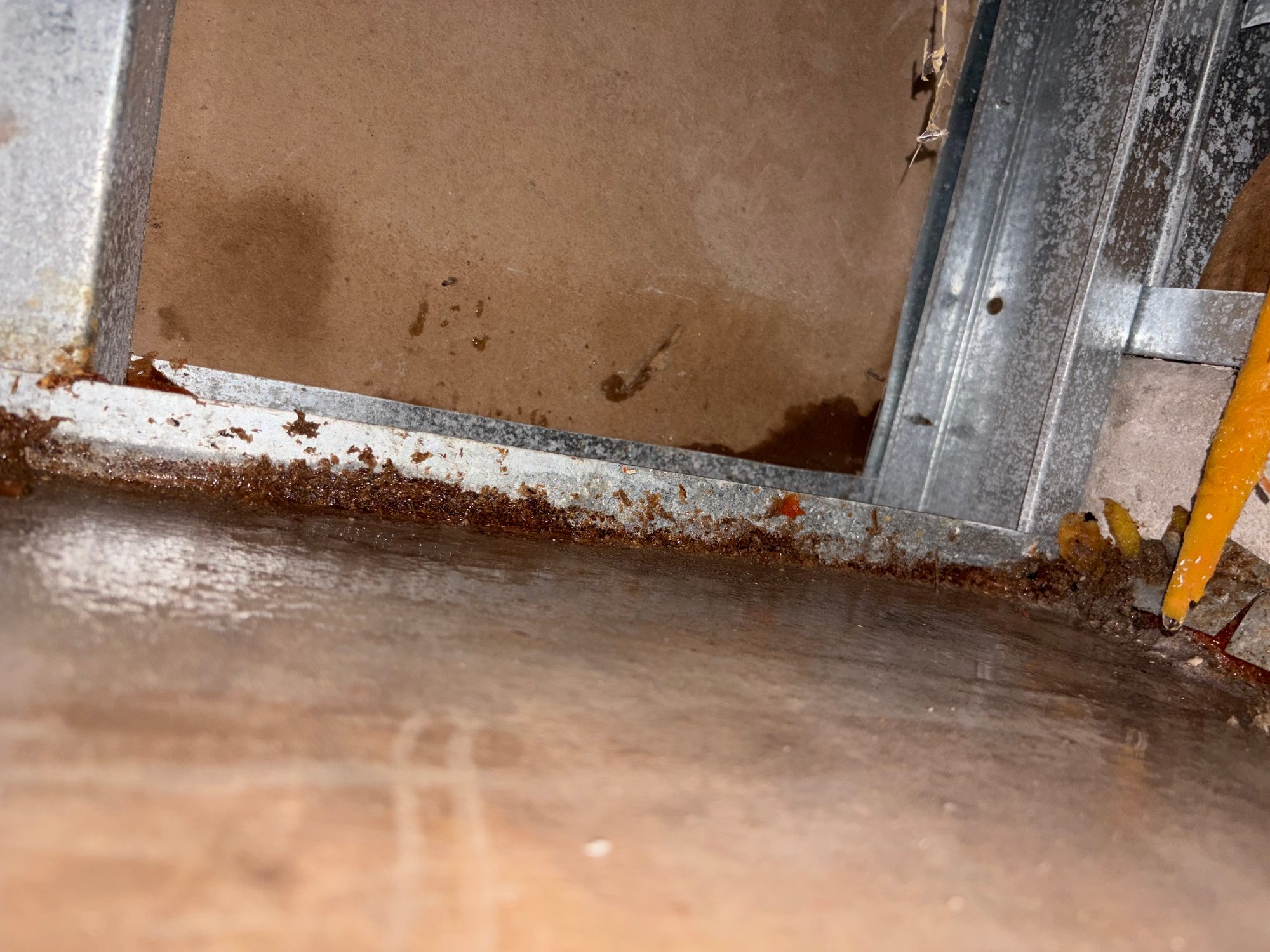
Close-up of a built-in garage cabinet base showing a particleboard back panel with dark staining and pooled moisture at the bottom edge, alongside a rusted metal cabinet frame track.
FINDINGS IN THIS PHOTO
- Garage cabinet backing (particleboard/MDF). The cabinet back panel shows dark water staining and standing moisture pooled at its base, consistent with a leak source above.
- Cabinet metal frame. The metal frame and track along the cabinet base show heavy surface rust and flaking corrosion.
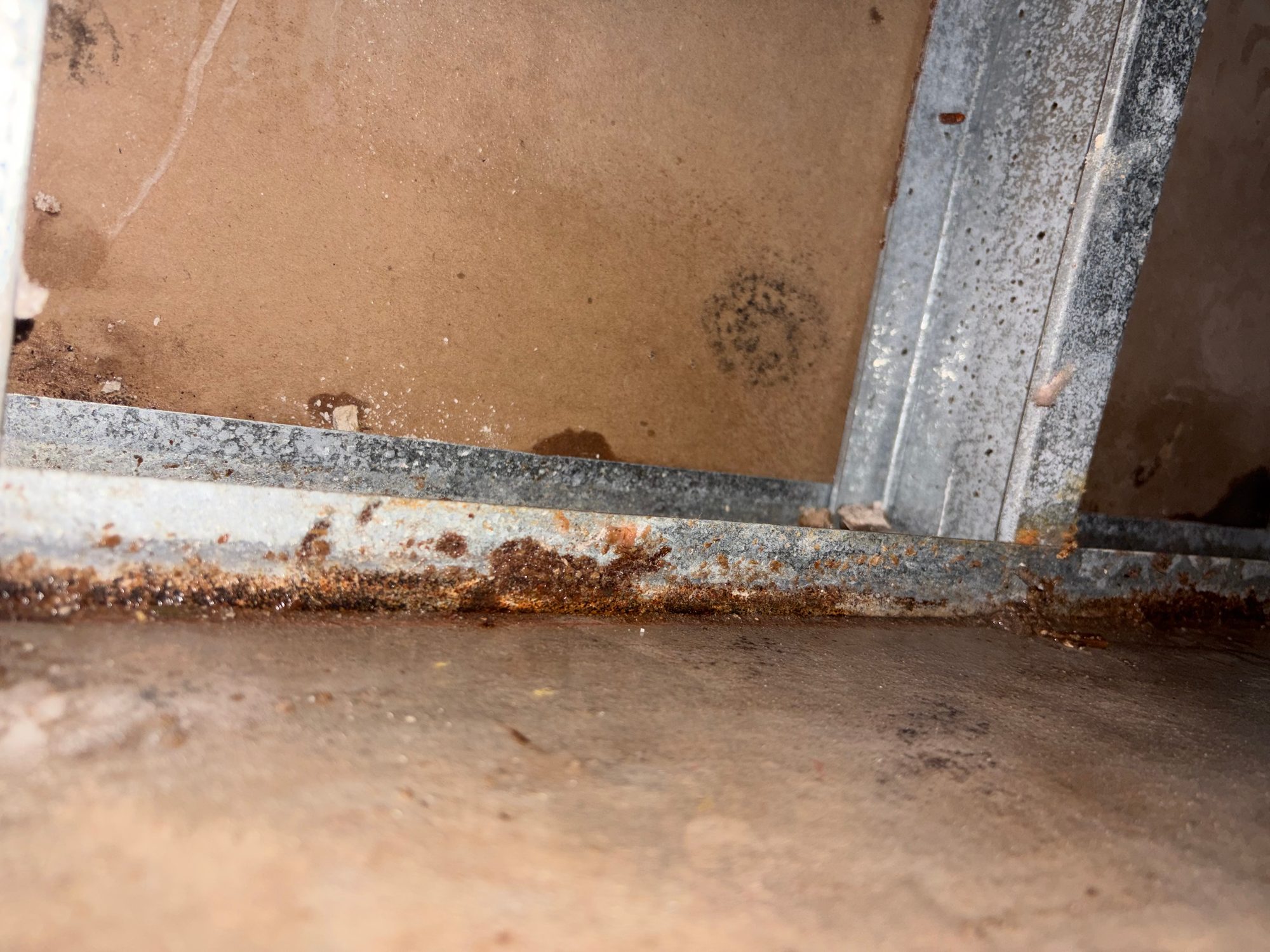
Interior corner of a garage cabinet showing a cluster of dark circular spots on the particleboard panel and heavy surface rust along the adjoining metal frame.
FINDINGS IN THIS PHOTO
- Cabinet interior spotting. A cluster of small dark circular spots is visible on the particleboard panel, consistent in appearance with mold growth.
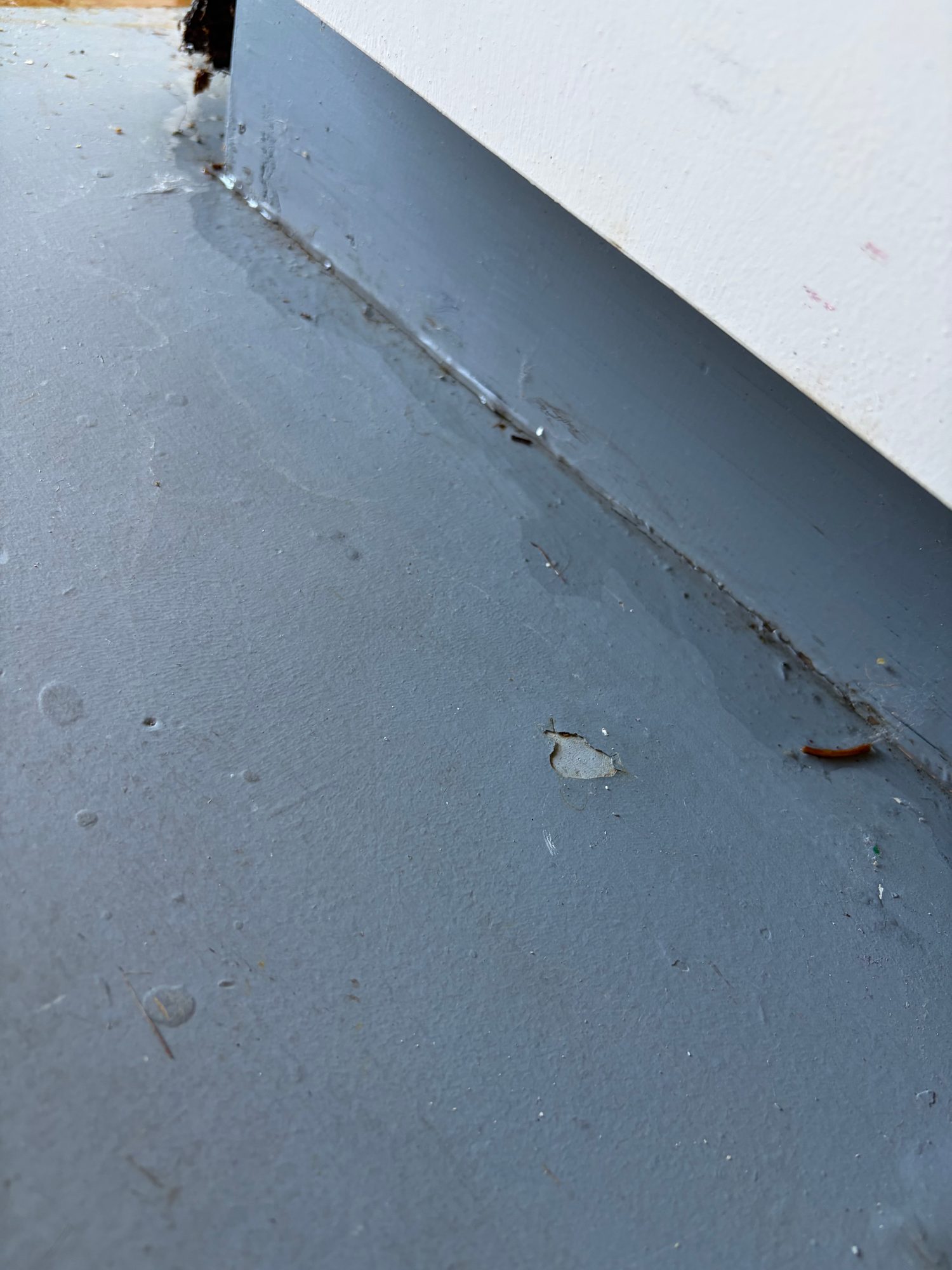
View of a painted concrete garage floor along a wall base, showing a damp sheen, discoloration at the wall-floor joint, and a small chip in the floor paint.
FINDINGS IN THIS PHOTO
- Garage concrete floor. The painted concrete floor shows a wet sheen, discoloration along the wall-floor joint, and a small chip in the paint surface.
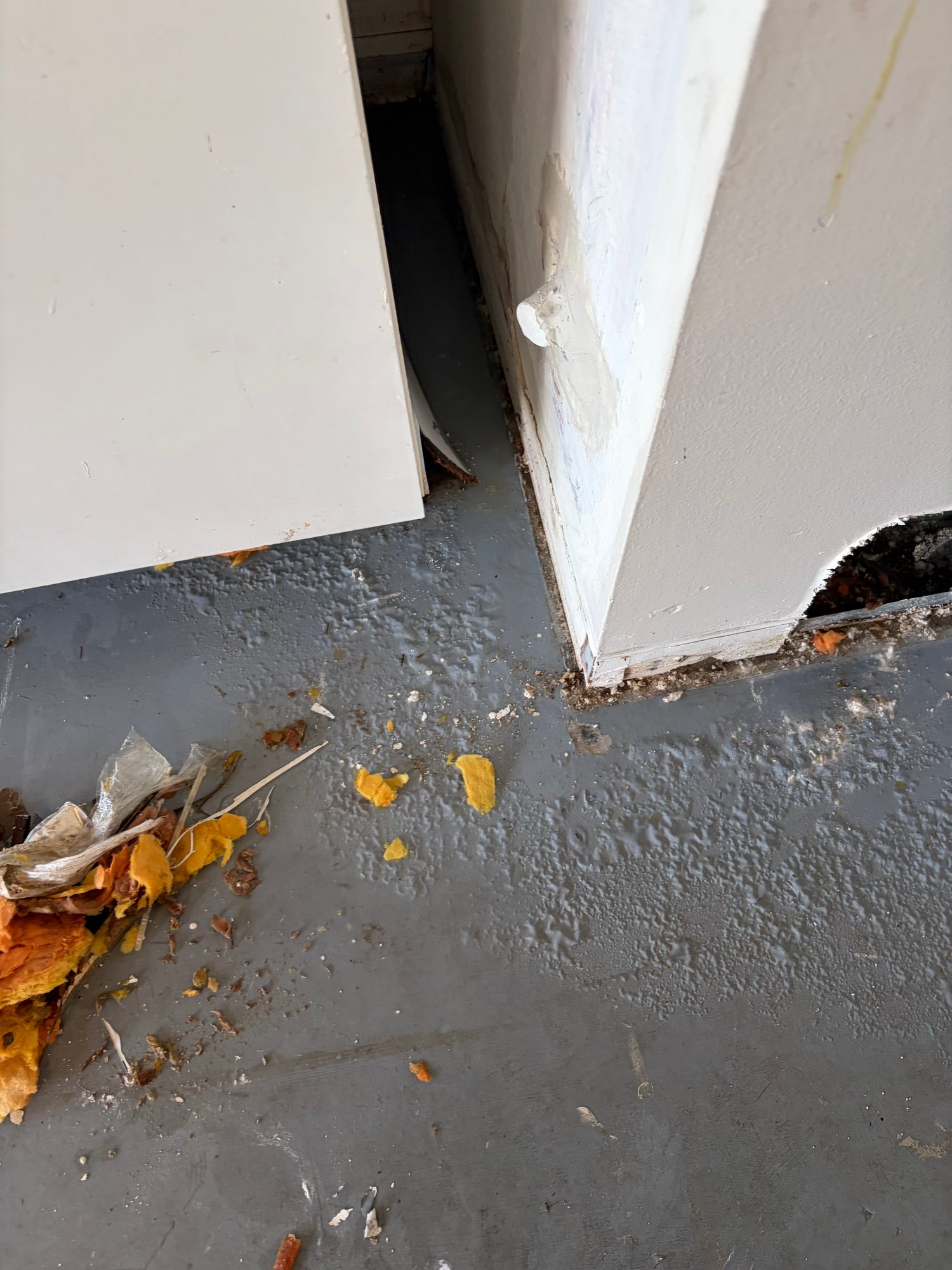
View of an open cabinet door area on a wet gray concrete floor with scattered orange foam-like debris and staining at the base of the adjacent door casing.
FINDINGS IN THIS PHOTO
- Door casing and floor debris. Wet flooring near an open cabinet shows scattered orange foam-like debris and staining at the base of the door casing.
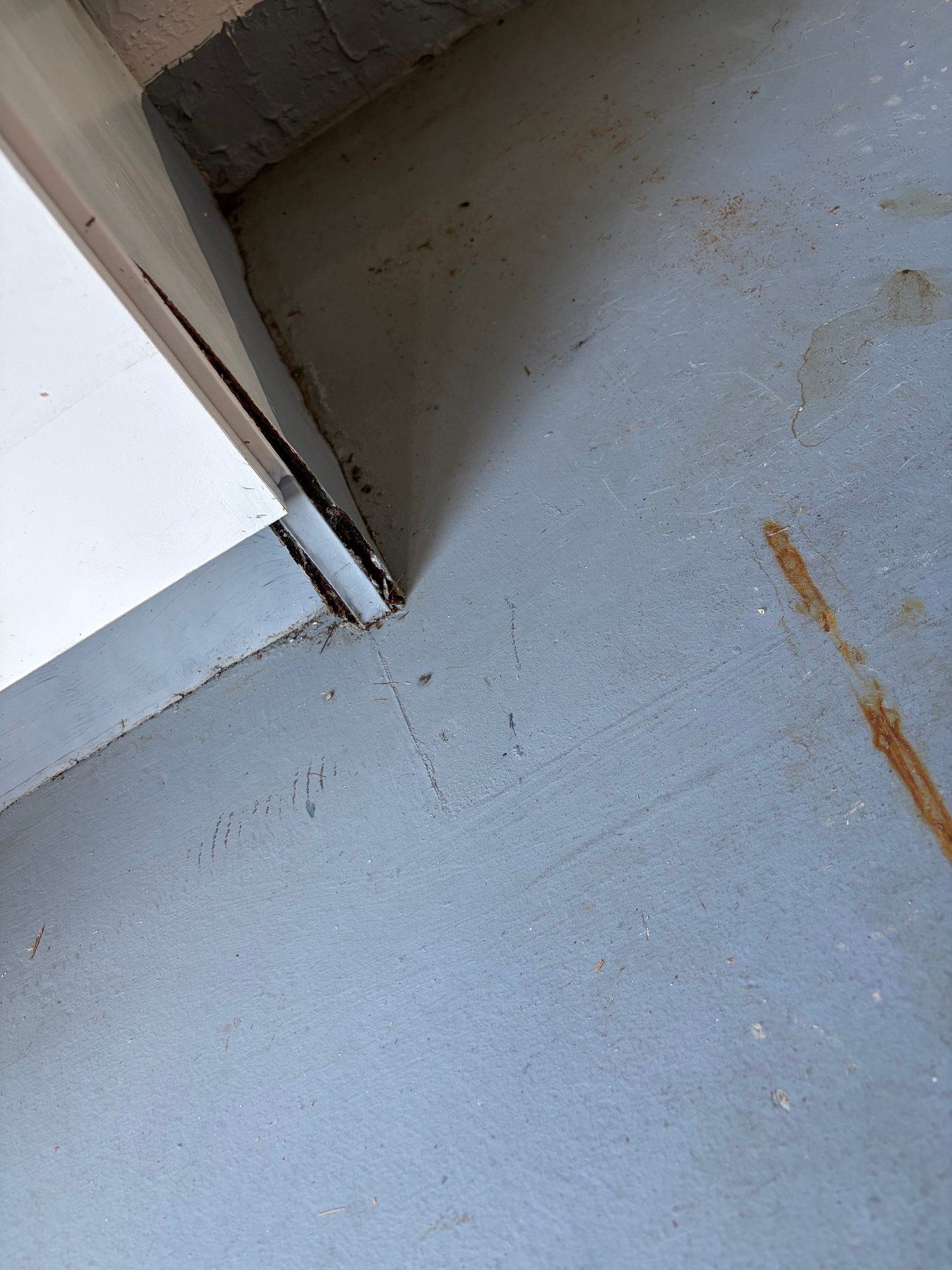
Close-up of a wall-floor corner on painted gray concrete showing a rust-colored drip trail down the wall and darker discoloration in the corner.
FINDINGS IN THIS PHOTO
- Wall-floor corner staining. A rust-colored drip trail runs down the painted wall into a darker discolored patch in the floor corner.
REPORTED CONDITIONS NOT PHOTOGRAPHED
- Cabinet frames. Homeowner confirmed during the interview that the metal cabinet frames shown in photos 1 and 2 are rusted through.
What could be hidden
Possible — not confirmed. Photos can't see behind surfaces.
- Mold growth inside wall cavity or behind cabinets. The visible spotting and over-3-day wet duration commonly accompany hidden growth on backing materials or framing that photos of the cabinet face cannot confirm.
- Moisture trapped under or around cabinet base. Standing water noted under 2 inches can wick beneath cabinet toe kicks and into the slab-cabinet interface, which is not visible in these close-up shots.
- Electrical components near the wet area. Garages commonly have outlets or wiring low on walls; none are shown in these photos, so exposure to the gray water cannot be ruled out or confirmed.
- Additional rust or degradation on unseen cabinet hardware. Corrosion visible on exposed frame sections often extends to fasteners and shelf brackets not captured in these close-up angles.
How serious this looks
Moderate
Real damage worth a professional's eyes, but nothing suggests an immediate structural hazard.
What repairs might cost
Estimated visible repair range
$2,500–$7,000
What drives the range
- Drying & cleanup$1,100–$3,200
- Cabinets & counters$1,100–$3,200
- Tear-out & debris$100–$500
- Contents & cleaning$0–$200
- Trim & doors$0–$100
This is a triage range for visible damage in your region — not a quote, and not an insurance settlement prediction. Hidden damage could raise it.
What your adjuster will look at
- 01
Category of water
The homeowner describes the water as gray (category 2), which is consistent with an AC condensate leak but is not clean water, and this affects whether contact materials are treated as salvageable or requiring replacement.
- 02
Duration and mitigation timeline
The area was reportedly wet for over 3 days before discovery, which adjusters typically flag as increasing the likelihood of secondary damage such as mold growth, visible here as dark spotting on the cabinet backing.
- 03
Sudden vs. gradual loss
AC-related leaks can be characterized as sudden or gradual depending on how long the unit was leaking undetected; this distinction is often central to appliance-leak claims and should be clarified with the AC service record.
- 04
Pre-existing corrosion
The metal cabinet frames show heavy rust; an adjuster may ask whether this corrosion predates the current incident or resulted entirely from it, which the photos alone cannot resolve.
- 05
Extent of contamination
Visible spotting consistent with mold growth was documented on cabinet materials; adjusters commonly request a professional mold assessment to confirm species and extent before authorizing remediation scope.
What to do next
- 01
Confirm the AC leak source is fully resolved
Have the air conditioner's condensate line, pan, or drain checked and repaired to prevent recurrence before starting repairs.
- 02
Schedule a moisture and mold inspection
A professional can test the dark spotting seen on the cabinet backing and check for hidden moisture behind cabinets or in the slab.
- 03
Photograph and document current conditions before cleanup
Take wider photos of the full garage and any debris before it is discarded, so the loss extent is clearly recorded.
- 04
Get itemized repair quotes
Obtain quotes for cabinet replacement, antimicrobial treatment, and floor cleaning so scope and costs are documented.
- 05
Report the loss details to your insurer
Provide the date the leak was discovered, how long the area was wet, and the AC service history to support the claim review.
What to ask next
Questions, not commitments — a competent professional answers every one of these without flinching.
BEFORE YOU CALL
When you call your insurance company
Run through this once before you dial. You're reporting facts and asking questions — you don't have to agree to anything on the first call. Have these in front of you:
- The date and time you first noticed the damage
- Where the water came from, as best you know it
- Which rooms and materials are affected
- Whether any drying or cleanup has already started
- Your incident report link — it answers most of their questions
- 1Is emergency mitigation covered if it starts before an adjuster visits?
- 2What is my deductible, and does this loss have a special deductible?
- 3Is there a deadline for mitigation or for filing documentation?
- 4Will an adjuster come out, or is this reviewed from photos and documents?
- 5What's my claim number, and who is my point of contact from here?
WHAT TO ASK
Before anyone starts cutting
Any reputable water mitigation company can answer all of these without hesitating:
- 1Can I get the scope of work in writing before work begins?
- 2Will you take moisture readings before and after, and share them with me?
- 3How will you contain dust and keep unaffected rooms clean?
- 4Will you keep daily drying logs I can attach to my records?
- 5Do you bill insurance directly, and what happens if I'm paying out of pocket?
- 6What does this cost if drying takes longer than expected?
How confident we are
Medium
The photos clearly document rust, staining, and probable mold spotting on cabinet materials and the floor, but they are close-up shots that do not show the full garage extent, wall cavities, or electrical fixtures.
Methodology: 5 photos analyzed. Repair ranges are computed from regional cost tables applied to the identified scope — not model-generated numbers. Report generated Aug 9, 2026, 7:48 PM.
Yours will look like this.
Built from your photos, priced for your area, and yours to delete whenever you want.
Takes about 5 minutes. Free, no account needed.