
September 4, 2026
A Wet Labor Day Weekend Is Coming. Check These Five Spots Before It Rains.
By Chris Johnston, Founder, WaterDamageIQ
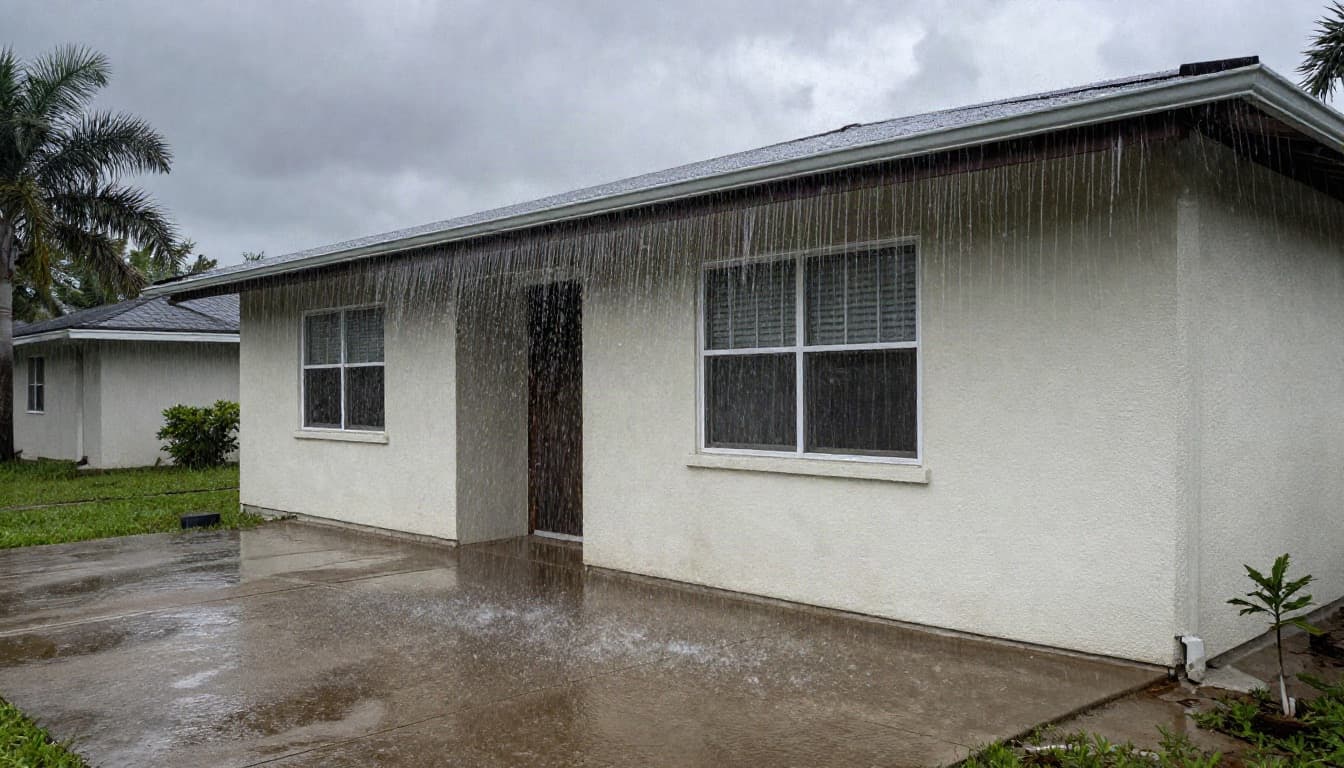
The short version
Forecasters expect a wet Labor Day weekend in Florida. Dolly's remnants, now a tropical wave, cross the state Thursday into Friday, and a front over the eastern U.S. traps moisture behind them. WSVN called for widespread totals of 2 to 4 inches with isolated higher amounts, and said flash flooding could happen any day through the holiday. This follows a dry summer: on September 3, severe drought still covered most of Broward and all of Miami-Dade. Roofs, gutters, and drains that have not been tested in months are about to be. Spend 15 minutes today on gutters and downspouts, the AC drain line, window and door tracks, the roof from the ground, and the low spots around the house. If water gets in, photograph it, stop the source, and start drying within 24 to 48 hours.
What the forecast says
Dolly is gone as a storm. The National Hurricane Center dropped its odds of redeveloping to 0 percent on Monday, according to FOX 35. But its moisture is not gone. WSVN's forecast this week has Dolly's remnants, now a tropical wave, crossing Florida Thursday into Friday, while a front over the eastern U.S. traps moisture over the state and keeps it wet through Labor Day.
The numbers: widespread totals of 2 to 4 inches, with isolated totals much higher. “Flash flooding could occur any day through Labor Day weekend,” WSVN meteorologist Dylan Federico wrote. FOX 35 reported model guidance showing more than 2 inches over the next week in parts of Orlando and Tampa. Thursday's WSVN update flagged slow-moving downpours on Saturday, with isolated flooding possible, and higher storm chances on Sunday and Monday afternoons.
Tropical Storm Edouard formed in the northern Gulf on Monday evening, but its track was toward the Texas and Louisiana coast, not Florida. Otherwise the Atlantic is quiet for the holiday.
Why this rain matters more than usual
South Florida has spent the summer dry. The National Weather Service's drought statement on September 3 still showed severe drought across most of Broward and all of Miami-Dade, and moderate drought in metro Palm Beach and northeast Broward. Recent rain has started to help, mostly over the Everglades.
Here is the inference: a roof, a gutter, or a window seal can be failing for months and nobody knows, because it has not had to handle a long, heavy rain. Several days of slow storms in a row are exactly what finds those gaps. A drip that starts on Saturday night, in a house full of holiday guests, with every contractor off until Tuesday, is the scenario worth 15 minutes today.
Five spots to check before it rains
- Gutters and downspouts. Clear leaves and seed pods, and make sure each downspout empties away from the house, not against the foundation or onto a patio that slopes back toward the door. The EPA's moisture guide lists cleaning and repairing gutters as basic upkeep.
- The AC drain line. Your air conditioner pulls water out of the air all day. The EPA says to keep drip pans clean and drain lines “unobstructed and flowing properly.” Find where the line exits outside and confirm it is dripping when the AC runs. Look in the pan under the air handler. Standing water there is a warning.
- Window and sliding door tracks. Vacuum out the tracks and make sure the small weep holes at the bottom of the frame are open. Blocked weep holes let wind-driven rain pool in the track and spill over onto the floor.
- The roof, from the ground. Do not climb up. Walk around with your phone zoomed in and look for lifted shingles, cracked tiles, gaps around vents and skylights, and old tarps. Take photos. They become your before record.
- Low spots and drains outside. Clear storm drains in front of your house if it is safe, and move anything that blocks the path water takes away from your foundation. Note where water collected the last time it rained hard.
Inside, take a quick photo of every ceiling while it is dry. If a stain shows up on Monday, a Friday photo of a clean ceiling settles when it started.
If water gets in this weekend
- Stop the source if you safely can. A bucket and towels under a ceiling drip. If the ceiling is bulging, poke a small hole at the lowest point over a bucket to drain it, because trapped water is heavy. Stay off the roof in a storm.
- Keep power off where water reached outlets, the panel, the water heater, or the air handler.
- Photograph before you clean. Wide shots, then close. The water source, the path it took, and the damage.
- Start drying. The EPA says to dry water-damaged areas within 24 to 48 hours to prevent mold growth. Fans, dehumidifiers, AC on. Pull up wet rugs. Call a water mitigation company if drywall, insulation, or flooring is wet, and ask about weekend rates before they start.
- Keep receipts for fans, tarps, buckets, and dehumidifiers. If you carry NFIP flood insurance, FEMA says you may be eligible for up to 1,000 dollars for reasonable expenses to protect insured property.
- Give your insurer notice. Florida allows one year from the date of loss to report a property claim (statute 627.70132). Report sooner, while the details are fresh.
Where the water came from changes who pays. Rain that rises outside and comes in at ground level is generally a flood question, and most homeowners policies do not cover flood. Our August field note on street flooding walks through that split. Water through a damaged roof or a failed window is usually a homeowners policy question.
If you find damage, our free damage check reads your photos, separates what we can see from what might be hidden in the wall or ceiling, gives a repair cost range, and tells you whether a claim is likely to clear your deductible. You get a timestamped report you can share with your insurer or a contractor.
Stay off flooded roads
The National Weather Service says 12 inches of rushing water can carry away most cars, and 6 inches of fast-moving water can knock over an adult. Over half of flood-related drownings happen when someone drives into flood water. If the street in front of you is under water, turn around.
Find help in Florida
Our Florida directory lists water mitigation crews, roofers, plumbers, mold specialists, and public adjusters, with licence numbers from public record where they exist. Save two numbers today so you are not searching on Sunday night.
Common questions
How much rain is Florida expecting over Labor Day weekend?
WSVN's forecast on September 2 called for widespread totals of 2 to 4 inches, with isolated totals much higher, as Dolly's remnants cross Florida and a front over the eastern U.S. traps moisture over the state. FOX 35 reported model guidance showing more than 2 inches over the next week in parts of Orlando and Tampa. These are forecasts, and totals under any one storm can be far higher or lower.
Is Dolly coming back as a storm?
No. FOX 35 reported that the National Hurricane Center lowered Dolly's redevelopment chances to 0 percent on Monday, August 31. What reaches Florida is tropical moisture from a tropical wave, which means rain, not wind. Tropical Storm Edouard formed in the northern Gulf on August 31 but was headed for the Texas and Louisiana coast.
Why would my roof leak now when it didn't all summer?
Much of South Florida has been in drought. The National Weather Service's September 3 drought statement still showed severe drought across most of Broward and all of Miami-Dade, and moderate drought in metro Palm Beach. A roof, gutter, or window seal can fail for months without anyone knowing, because it has not had to shed a long, heavy rain. Several days of slow-moving storms will find those gaps.
What should I do first if water comes in during the weekend?
Stop the source if you safely can: a bucket and a towel under a drip, a tarp only if you can reach it from the ground or a stable ladder in dry weather. Keep power off in any room where water reached outlets. Photograph everything before you move it. Then start drying. The EPA says water-damaged areas should be dried within 24 to 48 hours to prevent mold growth.
Is it safe to drive through flooded streets?
No. The National Weather Service says 12 inches of rushing water can carry away most cars, and 6 inches of fast-moving water can knock over an adult. It cites the CDC: over half of all flood-related drownings happen when a vehicle is driven into hazardous flood water. Turn around.
Water already inside?
Upload a few photos. In minutes you get what repairs should cost, whether a claim clears your deductible, and a timestamped report you can hand to an adjuster. Free, no account.
Sources
- WSVN 7News weather blog (Dylan Federico), Sep 2, 2026: Rain on repeat
- WSVN 7News weather blog (Dylan Federico), Sep 1, 2026: Stormy through Labor Day
- WSVN 7News weather blog (Jackson Dill), Sep 3, 2026: Mother Nature working this Labor Day weekend
- FOX 35 Orlando, Aug 31, 2026: NHC: Tropical Storm Dolly remnants could bring heavy rain to Florida
- NWS Miami, Sep 3, 2026: Drought information statement for South Florida
- US EPA: A brief guide to mold, moisture and your home
- National Weather Service: Turn Around Don't Drown
- FEMA FloodSmart: Flooding and homeowners coverage
- Florida Statutes 627.70132: Notice of property insurance claim
About the author
Chris Johnston. Chris Johnston founded WaterDamageIQ in Palm Beach Gardens, Florida, to give property owners a straight read on water damage before the first phone call to an insurer or contractor.
This is general information, not legal or insurance advice. Your policy language and your adjuster decide your claim.