
August 13, 2026
Cristobal Is Harmless. Use the Quiet Week to Document Your Home.
By Chris Johnston, Founder, WaterDamageIQ
The short version
Tropical Storm Cristobal formed on August 12 far out in the North Atlantic, well northeast of Bermuda, and poses no threat to land. Florida is expected to stay clear of tropical threats for at least the next week. That makes this a good week to prepare, because the National Hurricane Center says most Atlantic activity happens between mid-August and mid-October, with the peak on September 10. The single most useful thing a homeowner can do now is record the house as it is today: a narrated video walkthrough inside and out, close photos of ceilings, roof, and flooring, and copies of the policy pages that show your hurricane deductible and flood coverage. Florida's Chief Financial Officer recommends the same photo and video record. After a storm, it is the difference between showing an adjuster new damage and arguing about what was already there.
Cristobal: a name, not a threat
Tropical Storm Cristobal formed on Wednesday, August 12, in the far North Atlantic, well northeast of Bermuda. It is the third named storm of the 2026 season. FPREN meteorologist Andrew Wulfeck wrote that it peaked around 45 mph and was expected to hit cooler water, dry air, and strong wind shear, and weaken fast. It was heading toward the Azores and Europe, and poses no threat to land.
Two other systems were on the map. A disturbance about 1,000 miles east of the Leeward Islands had high development odds from the National Hurricane Center, but recent model runs were less supportive. A tropical wave just off Africa was expected to move west over the next week. FPREN's read: Florida and the rest of the Lower 48 should stay clear of tropical threats through at least the next week.
So this is a quiet week. It is also the start of the loud part of the year. The National Hurricane Center puts the peak of the season on September 10, with most activity between mid-August and mid-October. NOAA's August 6 update still favors a below-normal season, as we covered last week, but NOAA does not predict where storms land.
Why the “before” record matters for water damage
After a storm, the hardest water damage to prove is the slow kind: a ceiling stain, a soft spot in the floor, swollen baseboards. An adjuster will want to know whether that was there before. If you have a dated photo of the same ceiling, clean, from August, the conversation is short. If you don't, you are arguing from memory.
This is our observation from the triage side, not a rule an insurer publishes. But Florida's Chief Financial Officer gives the same advice: record photos or video of the inside and outside of your home before a storm, and take photos, videos, or notes of damage after.
The 30-minute walkthrough
- Start outside. Roof from every side you can see from the ground. Soffits and fascia. Gutters and downspouts. Windows, doors, and the seal around each. The garage door. Any tarp or patch already on the roof.
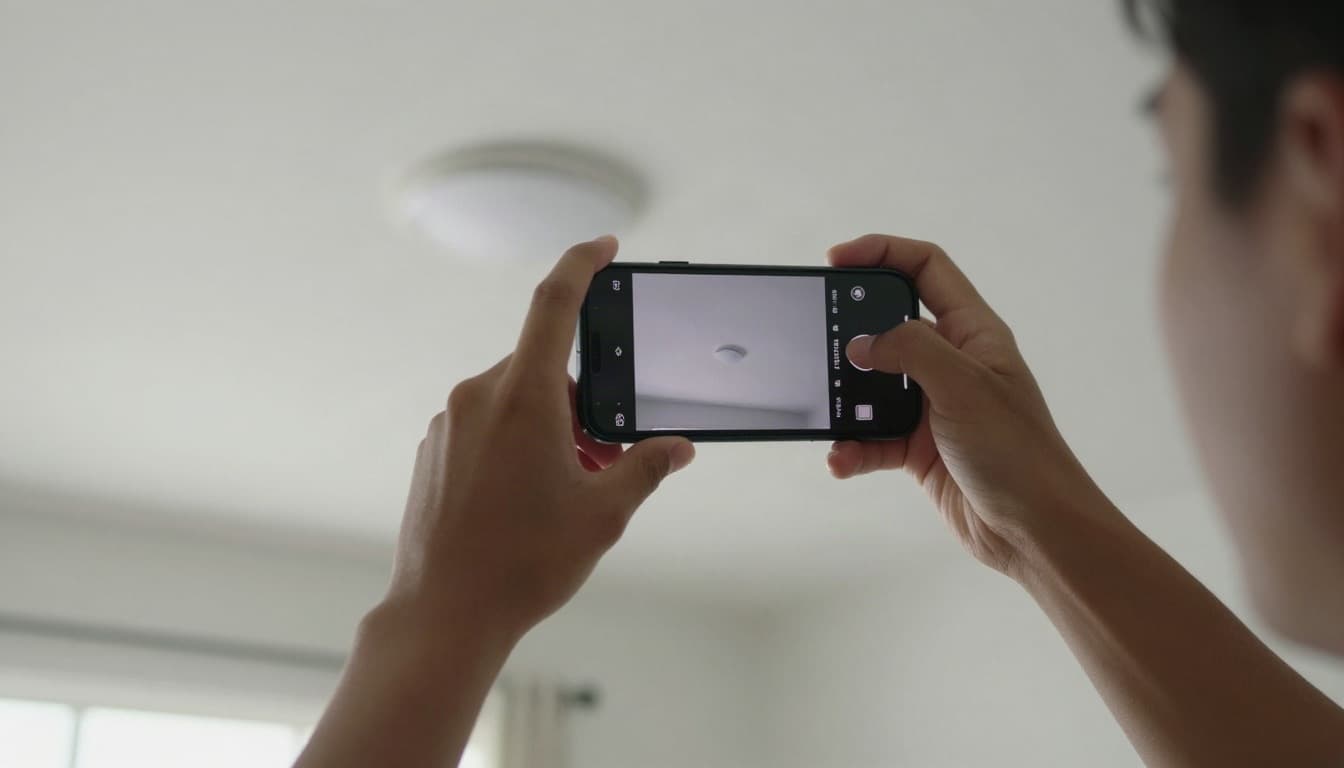
- Ceilings, room by room. Look up. Shoot the whole ceiling, then close on vents, recessed lights, and corners. These are where roof and AC water show first.
- Floors and baseboards. Wide shots, then close on seams and any cupping or lifting. Bathroom and kitchen floors near tubs, toilets, and the dishwasher.
- Water equipment. The air handler and its drain, the water heater, under every sink, the washer hookups. Note the date and the model plate on each.
- Belongings. Open closets and cabinets. Narrate what things are and roughly how old. Model numbers on electronics and appliances.
- Save it off the phone. Upload to cloud storage or email it to yourself. A phone in a flooded house is not a backup.
Get the policy numbers now, not after
- Your hurricane deductible. Florida Statute 627.701 requires insurers to offer hurricane deductibles of 500 dollars, 2 percent, 5 percent, and 10 percent of the dwelling limit. Percentage deductibles are a share of the dwelling limit, not of the damage. The statute applies the hurricane deductible on an annual basis to all covered hurricane losses in a calendar year.
- Whether you have flood coverage. FloodSmart says most homeowners policies do not cover flood, and a new NFIP policy typically takes 30 days to start. Bought today, it would begin in mid-September, still inside the busiest stretch.
- The claim phone number and your policy number. Write them on paper and put that with your documents in a dry, sealed container, as the CFO recommends.
- The notice deadline. Florida Statute 627.70132 gives one year from the date of loss to report a property claim, and 18 months for a supplemental claim.
After a storm, if water gets in
Report damage to your insurer, make emergency repairs to stop more water getting in, and document those repairs, the CFO advises. Keep a log of every conversation with an adjuster. Verify licences before you sign with a contractor or a public adjuster, and be wary of anyone who wants cash only. The state's Consumer Services Helpline is 1-877-MY-FL-CFO (1-877-693-5236).
When you are ready to compare before and after, our free damage check reads your photos, separates visible damage from what may be hidden, and gives you a timestamped report to share with your adjuster or a contractor.
Find help in Florida
Our Florida directory lists roofers, water mitigation crews, public adjusters, and mold specialists, with licence numbers from public record where they exist.
Already done your walkthrough?
Tell me what you found. A stain you had never noticed, a soft floor, a drain line that was already dripping. Those are the stories other homeowners learn from. Email reports@waterdamageiq.com.
Common questions
Is Tropical Storm Cristobal a threat to Florida?
No. Cristobal formed on August 12 in the far North Atlantic, moving away from land toward the Azores and Europe, and was forecast to weaken quickly. Florida Public Radio Emergency Network meteorologists said Florida and the rest of the Lower 48 are expected to stay clear of tropical threats through at least the next week.
When is the peak of hurricane season?
The National Hurricane Center says the peak of the Atlantic season is September 10, with most activity between mid-August and mid-October. NOAA's August 6 update favors a below-normal season, but it does not predict landfalls.
What should I photograph before a hurricane?
Every room, wide and close. Ceilings, especially under the attic and around vents and recessed lights. Floors and baseboards. Windows and doors. The roof and soffits from the ground. The air handler, water heater, and under sinks. Narrate a video as you walk, and save it somewhere off the phone. Florida's Chief Financial Officer recommends photos or video of the inside and outside of your home.
How does the Florida hurricane deductible work?
Florida Statute 627.701 requires insurers to offer hurricane deductible options of 500 dollars, 2 percent, 5 percent, and 10 percent of the dwelling limit. The hurricane deductible applies on an annual basis to all covered hurricane losses in the calendar year, across policies with the same insurer or insurer group, rather than starting over with each storm. Find your number on the declarations page now.
Does my homeowners policy cover hurricane flooding?
Most do not. FEMA's FloodSmart program says most homeowners and renters policies do not cover flood damage, and a new NFIP policy typically has a 30-day wait. A policy bought today would start in mid-September, still inside the busiest part of the season.
Who can I call with an insurance question in Florida?
The Florida Department of Financial Services runs a Consumer Services Helpline at 1-877-MY-FL-CFO (1-877-693-5236). The CFO also advises verifying contractor and adjuster licenses and keeping a log of every conversation with an adjuster.
Water already inside?
Upload a few photos. In minutes you get what repairs should cost, whether a claim clears your deductible, and a timestamped report you can hand to an adjuster. Free, no account.
Sources
- WLRN / FPREN, Aug 12, 2026: Tropical Storm Cristobal forms as African wave train shows mixed signals
- National Hurricane Center: Tropical Storm Cristobal advisory archive, Aug 2026
- National Hurricane Center: Tropical cyclone climatology (season peak)
- NOAA Climate Prediction Center, Aug 6, 2026: Atlantic hurricane outlook update
- Florida CFO, May 26, 2026: Ingoglia hurricane preparedness tour, Fort Lauderdale
- Florida Statutes 627.701: Hurricane deductibles
- Florida Statutes 627.70132: Notice of property insurance claim
- FEMA FloodSmart: Flooding and homeowners coverage, 30-day wait
About the author
Chris Johnston. Chris Johnston founded WaterDamageIQ in Palm Beach Gardens, Florida, to give property owners a straight read on water damage before the first phone call to an insurer or contractor.
This is general information, not legal or insurance advice. Your policy language and your adjuster decide your claim.