
September 23, 2026
Broward Flash Flooding: Is the Water in Your House Flood or Water Damage?
By Chris Johnston, Founder, WaterDamageIQ
The short version
On Monday, September 21, a flash flood warning covered central Broward County after radar showed 3 to 5 inches of rain, with more falling. On Tuesday, storms trained over northern Broward. For insurance, how the water got in decides who pays. Rain that comes through a damaged roof is usually a homeowners question. Rising surface water that covers two or more acres or two or more properties is flood under the National Flood Insurance Program, and most homeowners policies do not cover flood. Sewage or stormwater backing up through drains is excluded by standard homeowners policies unless you bought a backup endorsement, and NFIP covers it only when flooding directly caused it. Photograph where the water came in before you clean, and give notice to every policy that might apply.
Two days of rain on the same streets
Monday afternoon, September 21, the National Weather Service put central Broward under a flash flood warning. At 5:12 p.m., CBS News Miami reported, radar showed 3 to 5 inches had already fallen, with 2 to 4 more possible. The warning named Sunrise, Tamarac, Margate, Lauderhill, Oakland Park, North Lauderdale, Lauderdale Lakes and nearby communities. It expired at 6:45 p.m.
Tuesday it happened again, a little farther north. The Weather Service extended a flood advisory for northern Broward until 7 p.m. after 1 to 3 inches fell, with 1 to 3 more possible. Meteorologist Nic Merianos said the storms were “training,” moving over the same areas again and again. Plantation, Davie and Pembroke Pines were flagged, along with Coral Springs, Parkland and Coconut Creek.
The ground had no room left. Last week's storms had already saturated it, and FOX Weather's forecast center wrote on Saturday: “With increasing moisture and already saturated soils, flash flooding will remain a threat.” Its forecast (a prediction) called for 5 to 8 inches or more from Naples to Miami through Friday. We wrote last week about where homes leak first when rain returns after a dry year. This week the water is coming from the street.
How the water got in decides who pays
If you have water inside, the first question an adjuster asks is not how much. It is how. There are three common paths in a storm like this, and they land on different policies.
- From above. Rain through a roof, a window, or a wall opening. This is usually a homeowners policy question. Expect the adjuster to ask whether wind or another covered event created the opening, or whether it was wear.
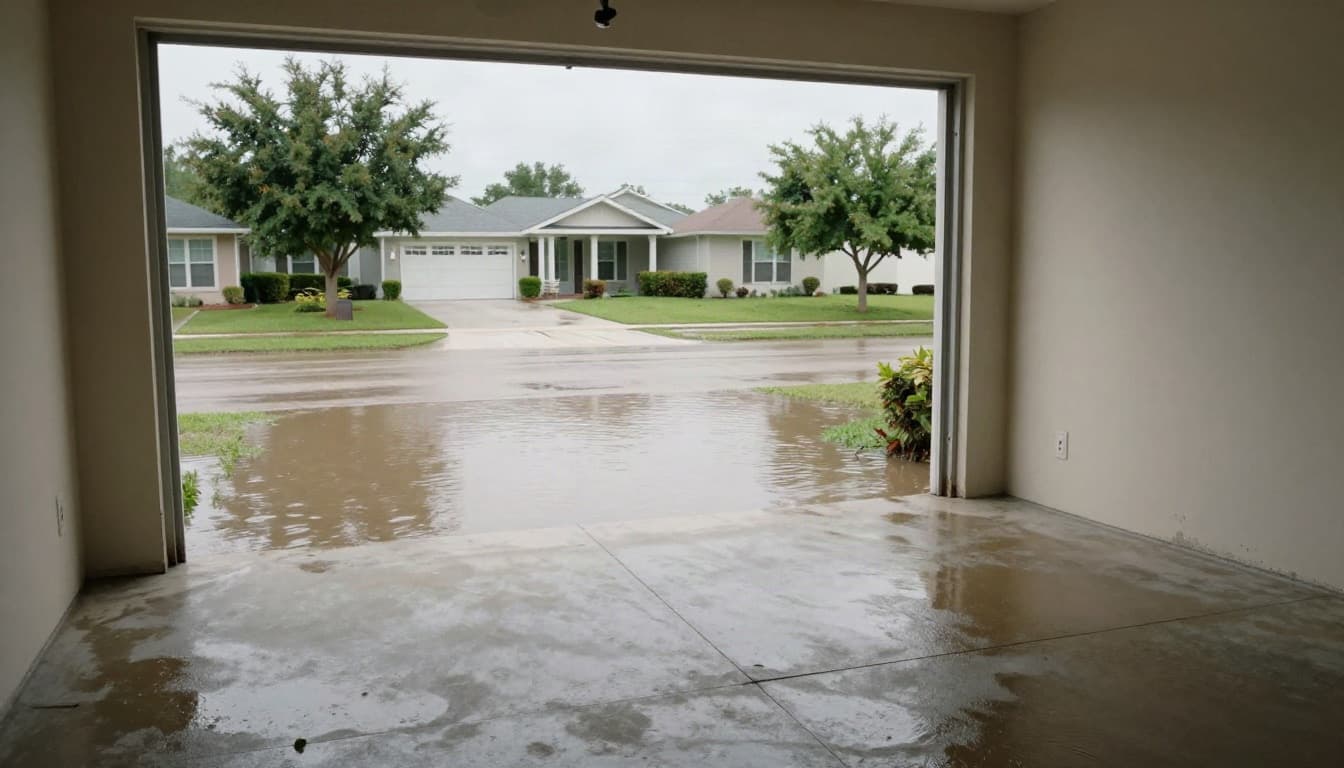
- From outside, rising. Water that pooled in the yard or street and came in under doors or through the garage. FEMA's flood program states that most homeowners and renters policies do not cover flood damage. That is what flood insurance is for.
- From below, through the pipes. Sewage or stormwater backing up through a floor drain, shower, or toilet. Standard homeowners policies generally exclude backup of sewer and drain lines. Many insurers sell a backup endorsement that adds it back.
Many homes see more than one path in the same storm. That is why the photos you take before cleanup matter so much: they show where the water entered.
What flood insurance means by “flood”
FEMA's published appeal decisions describe a flood as a temporary inundation of two or more acres of dry land, or two or more adjoining properties, one of which is yours, by inland or tidal overflow, rapid accumulation of rainfall, or mudflow.
Two things follow. First, a street-wide flash flood like Monday's in central Broward can meet that test if it covered your lot and your neighbours'. Second, water that pooled only on your property from a clogged drain or a low spot may not. FEMA's decision in that appeal upheld a denial because there was no general condition of flood. If your street flooded, photograph the neighbours' yards and the road too.
On backup: FEMA says that under an NFIP policy, damage from a sewer backup is covered if the problem is a direct result of flooding. A backup on a dry day from a blocked line is not flood.
If you do not have flood insurance yet
FEMA says there is typically a 30-day waiting period between applying for flood insurance and the effective date. A policy bought this week would be in force in late October, with much of hurricane season behind us, but well before the next rainy season.
If you are with Citizens and have wind coverage, check your renewal. Citizens has phased in a flood insurance requirement: homes in FEMA flood zones since 2023, then by dwelling replacement cost. Renewals on or after January 1, 2026 pulled in homes at 400,000 dollars and up. All remaining required properties follow at renewals on or after January 1, 2027. Condo unit-owner policies are excluded.
What to do this week if water came in
- Stay safe. Do not wade through standing water. If it reached outlets, the panel, the water heater, or the air handler, keep that power off and call a licensed electrician.
- Photograph the entry point. The door threshold, the garage, the drain that overflowed, the stain on the ceiling. Then every room wide and close, the water line on walls, and damaged items before they go to the curb.
- Treat backup water as contaminated. If it came up through a drain or toilet, keep kids and pets away and wear gloves and boots. Porous items it soaked are hard to save.
- Notify every policy that might apply. Homeowners and flood. Let the adjusters sort out which pays. Florida Statute 627.70132 gives one year after the date of loss to give notice. Sooner is better.
- Start drying. The EPA says to dry water-damaged areas within 24 to 48 hours to prevent mold. Baseboards and the bottom of drywall soak up water you cannot see.
Our free damage check reads your photos, separates what we can see from what might be hidden, gives a repair cost range, and runs the math on whether a claim clears your deductible. The timestamped report helps you show an adjuster where the water came in.
Find help in Florida
Our Florida directory lists water mitigation crews, plumbers, public adjusters, mold specialists and electricians, with licence numbers from public record where they exist.
Common questions
Does homeowners insurance cover flash flooding?
Usually not, if the water rose from outside. FEMA's flood program states that most homeowners and renters policies do not cover flood damage. Flood is covered by a separate flood policy through the NFIP or a private carrier. If rain came in through a roof or window opening damaged by wind, that is often handled under the homeowners policy instead. Read your own policy and ask your agent.
What counts as a flood for flood insurance?
FEMA's appeal decisions describe a flood as a temporary inundation of two or more acres of dry land or two or more adjoining properties, one of which is the policyholder's, by inland or tidal overflow, rapid accumulation of rainfall, or mudflow. Water that collects only on your lot from a drainage problem may not meet that definition.
Is sewage backing up into my house covered?
Standard homeowners policies generally exclude backup of sewer and drain lines. Many insurers sell a water or sewer backup endorsement that adds it. Under NFIP flood insurance, FEMA says damage from a sewer backup is covered if the problem is a direct result of flooding. If neither applies, the owner pays.
Can I buy flood insurance now for the rest of hurricane season?
You can buy it, but FEMA says there is typically a 30-day waiting period between the application and the effective date. A policy bought this week would not cover a storm in the next month.
I have Citizens. Do I need flood insurance?
Possibly already. Citizens requires flood insurance on personal residential policies with wind coverage in phases: homes in FEMA flood zones since 2023, then by dwelling replacement cost, 400,000 dollars and up at renewals on or after January 1, 2026. All remaining required properties follow at renewals on or after January 1, 2027. Condo unit-owner policies are excluded.
What should I do first after floodwater gets into my house?
Stay out of standing water and keep power off where water reached outlets, the panel, or the air handler. Photograph where the water came in, the water line on walls, and damaged items before cleaning. Give notice to your homeowners insurer and any flood carrier. Start drying within 24 to 48 hours.
Water already inside?
Upload a few photos. In minutes you get what repairs should cost, whether a claim clears your deductible, and a timestamped report you can hand to an adjuster. Free, no account.
Sources
- CBS News Miami, Sep 21, 2026: Flash flood warning in Broward expired Monday evening
- CBS News Miami, Sep 22, 2026: Heavy rain hits Broward as storms repeatedly move over the same areas
- FOX Weather, Sep 19, 2026 (updated Sep 22): Drought-ridden Florida faces week of heavy rain
- FEMA FloodSmart: Appeal decision A4, No general condition of flood upheld (flood definition)
- FEMA FloodSmart: Flooding and homeowners coverage, 30-day wait
- FEMA news release: NFIP flood insurance basics (sewer backup caused by flooding)
- PSMIC insurance FAQ: Backup of sewers or drains endorsement
- Citizens Property Insurance: New flood requirements
- EPA: A brief guide to mold, moisture and your home
- Florida Statutes 627.70132: Notice of property insurance claim
About the author
Chris Johnston. Chris Johnston founded WaterDamageIQ in Palm Beach Gardens, Florida, to give property owners a straight read on water damage before the first phone call to an insurer or contractor.
This is general information, not legal or insurance advice. Your policy language and your adjuster decide your claim.