
August 28, 2026
Tarps, Boards, and Fans: The Emergency Repairs Your Policy Expects After a Storm
By Chris Johnston, Founder, WaterDamageIQ
The short version
On August 25, Florida's Chief Financial Officer brought his hurricane preparedness tour to Palm Beach Gardens. His office's after-storm advice includes making emergency repairs to prevent further damage and documenting them. That is not just advice. Many homeowners policies make protecting the property a duty after a loss, and in 2025 a Florida appeals court reversed a jury award for homeowners who were paid for roof and siding repairs but never produced the receipts their policy required. An emergency repair stops more water from getting in: a tarp, a board, a shut-off valve, fans and a dehumidifier. It is not the permanent fix. Some policies cap what they pay for emergency measures unless the insurer approves more in advance, so ask first if the bill will be large. Since 2023, Florida homeowners cannot sign their claim benefits over to a contractor, and contractors may not offer to waive your deductible or tell you what your policy covers.
What happened this week
On Tuesday, August 25, Florida Chief Financial Officer and State Fire Marshal Blaise Ingoglia brought his statewide hurricane preparedness tour to Palm Beach Gardens. “Preparedness cannot be an afterthought, especially as we enter the peak of the season,” he said.
The before list is the familiar part: supplies, documents, insurance. The after list matters just as much, and it is where homeowners lose money. Near the top of it: report damage to your insurer, and make emergency repairs to prevent further damage, and document them. The rest of the list is about contractors: verify licences, don't rush to sign anything, and be wary of anyone who wants cash only.
On Thursday, Tropical Storm Dolly formed in the central Atlantic, about 1,555 miles east of the Leeward Islands. The National Hurricane Center expected it to weaken into a tropical wave before reaching the islands, and no watches or warnings were in effect. It is not a Florida story. But the hurricane center puts the peak of the season on September 10, two weeks from now, so this is a good weekend to know what you would do in the first day after a storm.
Why emergency repairs are your job
Many homeowners policies list protecting the property from further damage as one of your duties after a loss, as the one in the case below did. If a damaged roof lets in rain for a week because nobody put a tarp on it, the insurer can argue that the second week of water damage was avoidable.
The paperwork matters as much as the tarp. In March 2025, Florida's First District Court of Appeal reversed a jury award against Homeowners Choice Property and Casualty Insurance Co., Insurance Journal reported. The homeowners' policy required reasonable repairs to protect the property and receipts or invoices for repairs. They cashed the insurer's check and paid for roof and siding work, but never provided the receipts. The court found their breaches of the post-loss conditions material. “We reverse because the Clarks failed to present sufficient evidence,” Judge Thomas Winokur wrote.
What counts as an emergency repair
The test is simple: does it stop more damage? If yes, it is probably an emergency repair. If it restores the house to how it was, it is probably a permanent repair, and that usually waits for the adjuster.
- Roof: a tarp over the damaged section, fastened with battens, not just weighted with bricks. Have a roofer do it if the roof is steep, wet, or high.
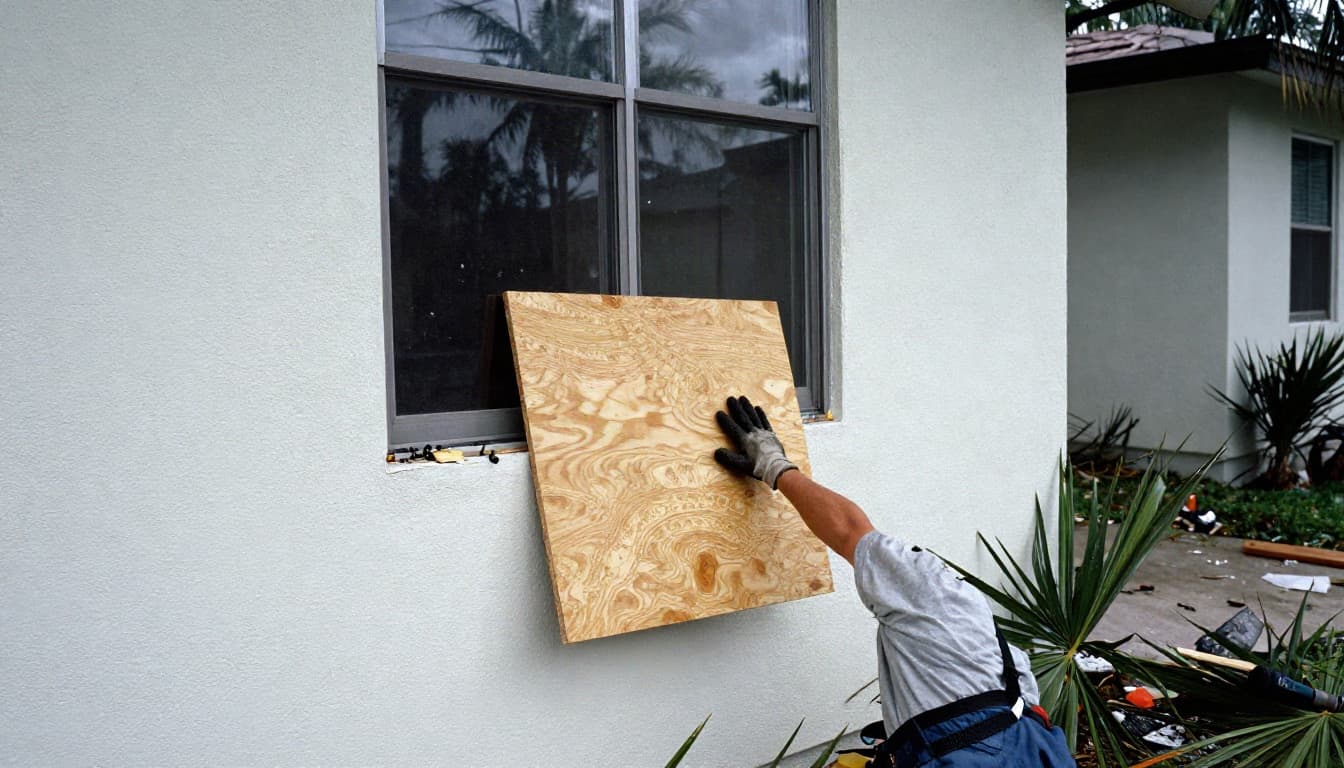
- Windows and doors: plywood over broken glass or a sliding door that will not seal.
- Plumbing: shut the main valve if a line broke, and leave it off until a plumber looks.
- Inside: pull wet rugs and carpet pad, move furniture off wet floors, and run fans and dehumidifiers. The EPA says to dry water-damaged areas within 24 to 48 hours to prevent mold growth.
Not emergency repairs: a new roof, new drywall, new flooring, repainting. Keep the damaged materials, or at least photos of them, until the adjuster has seen them.
Ask before a big emergency bill
Some policies cap what they pay for emergency measures unless the insurer approves more first. A Citizens policy form at the center of a 2021 Third District Court of Appeal case limited reasonable emergency measures to “the greater of $3,000 or 1% of your Coverage A limit of liability,” according to a 2022 write-up by Merlin Law Group. Citizens had to respond to a request to go over that limit within 48 hours.
In that case, a mitigation company finished the work and then sent an invoice for more than the cap. The court treated the invoice as a bill, not a request to exceed the limit, and the insurer's payment stood at the cap. The lesson for homeowners: if a mitigation or tarping quote looks large, find the emergency measures section of your policy and send the insurer a written request before the work runs up, not after.
Contractor rules that protect you
After a storm, the knock on the door often comes before the adjuster. Florida law changed what that person can offer you.
- No signing over your claim. Florida Statute 627.7152 says a policyholder may not assign post-loss benefits under a residential property policy issued on or after January 1, 2023, and calls any attempt “void, invalid, and unenforceable.”
- No deductible waivers or gifts. Under statute 489.147, contractors may not offer a rebate, gift, gift card, cash, coupon, or waiver of any insurance deductible in exchange for a roof inspection or for making a roof damage claim.
- No coverage advice. The same statute bars contractors from interpreting policy provisions or advising you about coverage, and from adjusting a claim unless they hold a public adjuster license. Violations can bring fines of up to 10,000 dollars each.
- Proof of insurance. The CFO's office says legitimate contractors must carry insurance. Ask for proof of liability and workers' compensation coverage before anyone gets on your roof.
If someone offers to “take care of your deductible,” that is your signal to close the door.
Your first-day checklist
- Stay safe first. Stay off the roof in wind or rain. Keep power off where water reached outlets or the panel.
- Report the damage to your agent or insurer, and ask whether your policy limits emergency measures.
- Stop the water. Tarp, board, shut off, dry.
- Keep every receipt. Tarps, plywood, fans, dehumidifier rental, the roofer's invoice. Photograph the repair once it is in place.
- Do not sign on the spot. Call the CFO's Consumer Services helpline at 1-877-MY-FL-CFO if you are unsure.
Once the water is stopped, our free damage check reads your photos, separates what we can see from what might be hidden, gives a repair cost range, and runs the math on whether a claim is likely to clear your deductible. You get a timestamped report to share with your insurer or a contractor. If you have not built a before record of your house yet, our August walkthrough guide covers it.
Find help in Florida
Our Florida directory lists roofers, water mitigation crews, plumbers, and public adjusters, with licence numbers from public record where they exist. Pick two now, while nobody is busy.
Common questions
Do I have to make repairs before the adjuster comes?
You generally have to take reasonable steps to stop further damage. Florida's Chief Financial Officer advises making emergency repairs to prevent further damage and documenting them. In a 2025 case reported by Insurance Journal, the homeowners' policy required reasonable repairs to protect the property, and receipts or invoices for repairs, and a Florida appeals court found their breaches of those post-loss conditions material.
What counts as an emergency repair?
Work that stops more damage: a tarp over a damaged section of roof, plywood over a broken window or door, shutting off water to a broken line, pulling wet carpet, and running fans and dehumidifiers. Replacing the roof, new drywall, and new flooring are permanent repairs, and those usually wait until the insurer has inspected.
Is there a limit on what my insurer pays for emergency repairs?
Some policies set one. A Citizens policy form discussed in a 2021 Florida appeals case limited reasonable emergency measures to the greater of 3,000 dollars or 1 percent of the dwelling coverage limit unless Citizens approved more, with approval due within 48 hours of a request. The court held that an invoice sent after the work was done was not a request. Read the emergency measures section of your own policy, and ask before the work if the cost may be high.
Can a contractor handle my insurance claim for me?
Not the way it used to work. Florida Statute 627.7152 says a policyholder may not assign post-loss benefits under a residential property policy issued on or after January 1, 2023, and calls any attempt void. Under statute 489.147, contractors may not interpret policy provisions or advise you about coverage, and may not adjust a claim unless they hold a public adjuster license.
A roofer offered to cover my deductible. Is that legal?
No. Florida Statute 489.147 bars contractors from offering a rebate, gift, gift card, cash, coupon, or waiver of any insurance deductible in exchange for a roof inspection or for making a roof damage claim. Violations can bring fines of up to 10,000 dollars each. Report it to the Department of Business and Professional Regulation.
How do I check a contractor after a storm?
Florida's CFO advises verifying the licence of any contractor or adjuster, hiring licensed providers from your community where you can, asking for proof of liability and workers' compensation insurance, and being wary of anyone who wants cash only. Don't rush to sign. The CFO's Consumer Services helpline is 1-877-MY-FL-CFO.
Water already inside?
Upload a few photos. In minutes you get what repairs should cost, whether a claim clears your deductible, and a timestamped report you can hand to an adjuster. Free, no account.
Sources
- Florida CFO press release, Aug 25, 2026: Ingoglia visits Palm Beach County on eighth stop in statewide hurricane preparedness tour
- KLTV / National Hurricane Center, Aug 27, 2026: Tropical Storm Dolly forms in Atlantic, forecast to weaken
- National Hurricane Center: Tropical cyclone climatology (season peak)
- Insurance Journal, Apr 7, 2025: Insureds have post-loss duties too, Florida appeals court says in HCI win
- Merlin Law Group (Nicholas Conklin), Apr 21, 2022: Exceeding policy limits for reasonable emergency measures
- Florida Statutes 627.7152: Assignment agreements (no post-loss assignment for policies issued on or after Jan 1, 2023)
- Florida Statutes 489.147: Prohibited property insurance practices by contractors
- US EPA: A brief guide to mold, moisture and your home
About the author
Chris Johnston. Chris Johnston founded WaterDamageIQ in Palm Beach Gardens, Florida, to give property owners a straight read on water damage before the first phone call to an insurer or contractor.
This is general information, not legal or insurance advice. Your policy language and your adjuster decide your claim.