
October 27, 2026
South Florida's Record King Tide: What Flooded and What to Do Now
By Chris Johnston, Founder, WaterDamageIQ
The short version
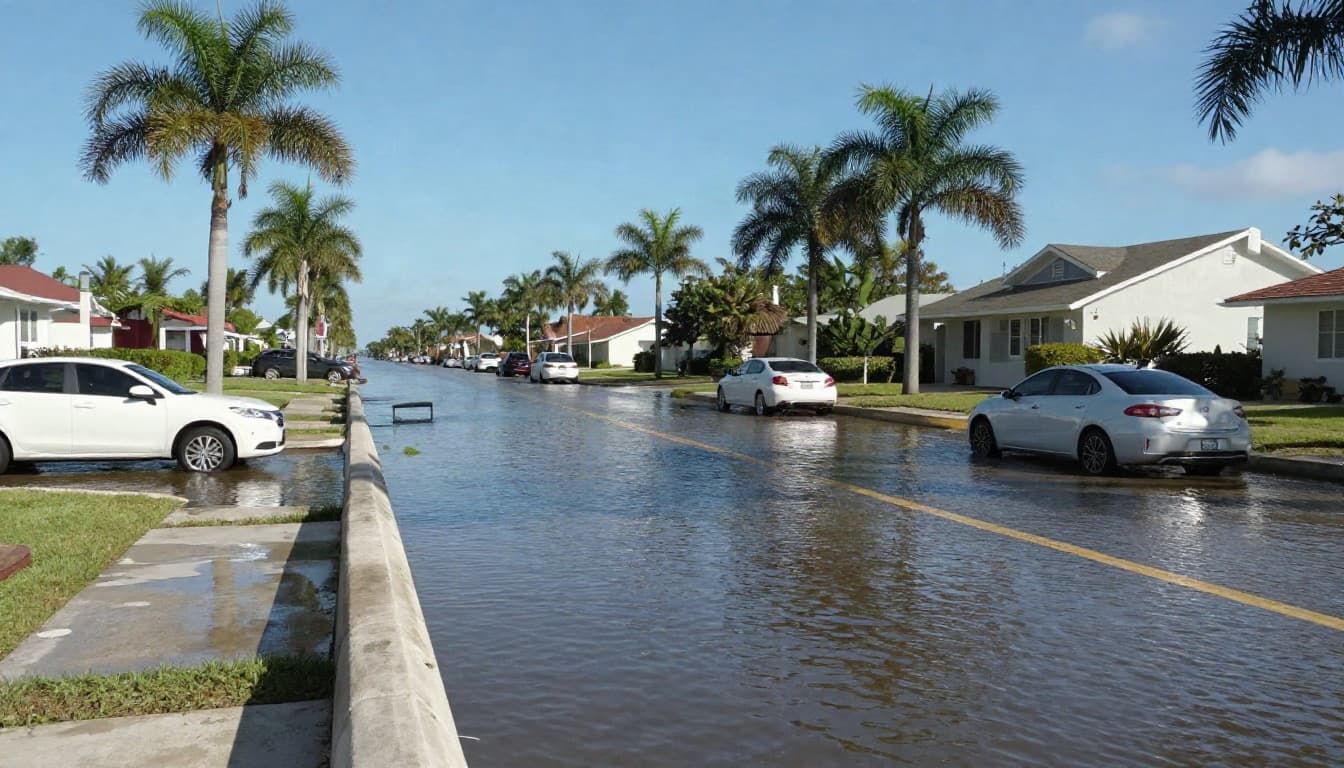
On October 27, 2026, a king tide pushed by days of northeast wind flooded streets and some homes from Martin County to Miami. Fort Lauderdale and Miami saw about 2.5 feet of water above normal high tide, which the National Weather Service counts as major flooding, and Port Everglades set a gauge record. More king tides are predicted for November 5 to 12, November 22 to 29 (Palm Beach County's narrow window is November 24 to 27), and December 22 to 27. If water got into your home, garage, car, or AC unit: photograph everything before you clean, keep the main breaker off until an electrician checks it, and know that standard homeowners policies do not cover flood. You have one year to give your insurer notice of a claim in Florida.
What happened on October 27
King tides are the highest predicted tides of the year. In South Florida the fall ones line up with the moon's pull and seasonally high sea levels, so some low streets flood on a sunny day. Palm Beach County's own forecast said this year's king tides were not expected to reach flood stage at the Lake Worth gauge. It also warned that storms can push water higher than the prediction.
That is what happened. Days of strong northeast wind stacked water against the coast. By Monday, October 26, the National Weather Service had a Coastal Flood Warning up for coastal Palm Beach County through 8 p.m. Wednesday, October 28, and for coastal Martin, St. Lucie, and Indian River counties into early Thursday. Gusts near 40 mph and breaking waves of 8 to 13 feet hit the Palm Beaches, with a gale warning from Jupiter Inlet to Deerfield Beach.
Here is what was reported, by place:
- Martin County. Water came over the Manatee Marina seawall in Stuart around 7 a.m. Monday. Homes on SW Dyer Point Road in Palm City were surrounded by water, and the Sheriff's Office reported some roads impassable.
- Palm Beach County. Flagler Drive flooded in West Palm Beach. Boynton Beach closed roads. Water reached Spanish River Park in Boca Raton. Manalapan and South Ocean Boulevard near the Lantana Bridge flooded, and traffic was rerouted in the Town of Palm Beach. Surf knocked out deck panels on the Juno Beach Pier, which is closed until further notice.
- Broward and Miami-Dade. Fort Lauderdale and Miami saw about 2.5 feet of water above normal high tide, which the Weather Service classifies as major flooding. Port Everglades set a record for its gauge, which dates to 2018. Virginia Key reached its highest non-hurricane level since the gauge went in in 1994. The Las Olas Bridge closed. University of Miami researcher Brian McNoldy told the Miami Herald, “This is the highest king tide we've ever had.”
Forecasters said Wednesday morning's tide was unlikely to top Tuesday's. The warnings were still in effect at the time of writing, so check the Weather Service before driving coastal roads.
When is the next king tide?
These dates are astronomical predictions from city and county pages that use NOAA tide data. Weather can make any of them worse.
- November 5 to 12, 2026: East Coast king tide window (Fort Lauderdale lists November 5 to 11, Miami November 6 to 9).
- November 22 to 29, 2026: next window. Palm Beach County flags November 24 to 27 as the days high tides come within 3 inches of action stage at Lake Worth.
- December 5 to 8: Fort Lauderdale lists these as possible flooding dates.
- December 22 to 27, 2026: last window of the year.
Miami says king tide flooding typically lasts about three hours around each high tide. Plan errands and parking around the peak, not the whole day.
Why saltwater is different
Rainwater flooding is bad. Tidal flooding is seawater, and seawater does extra damage to anything metal or electrical.
- Electrical. The Electrical Safety Foundation says ocean water and salt spray are especially damaging because the residue is corrosive and conductive. Breakers, outlets, switches, and GFCI or AFCI devices that got wet generally need to be replaced, not dried out.
- AC and HVAC. FEMA says HVAC components generally are not flood resistant, and ductwork under a floor that flooded should be replaced. An outdoor condenser that sat in saltwater should be checked even if it seems to run.
- Cars. Saltwater corrodes brakes, wiring, and underbodies, and the damage can surface weeks later. After Hurricane Ian, NHTSA warned that salt residue in a lithium-ion battery pack can start a fire right away or weeks later, and advised moving flooded EVs at least 50 feet from buildings.
What to do if water got in
- Stay safe first. Don't walk or drive through floodwater. If water reached outlets or the panel, keep the main breaker off and call a licensed electrician.
- Photograph before you clean. Wide shots of each room, then close-ups of the water line on walls, baseboards, cabinets, appliances, and the car. Include something that shows the date. Photos taken now are the hardest evidence to recreate later.
- Write down the timeline. When the water came in, how high it got, how long it stayed, and whether it came from the street, the yard, or through the roof. How the water entered can decide which policy applies.
- Don't throw out damaged items yet unless they are a health hazard. If you must, photograph them first and keep a list.
- Start drying within 24 to 48 hours. Wet drywall, insulation, and carpet pad hold water out of sight. A mitigation crew can measure moisture behind walls that look dry.
- Call your insurer and your flood carrier. Standard homeowners policies do not cover flood. If you have a separate flood policy, open that claim too. In Florida you have one year from the date of loss to give notice of a property claim, but sooner is better.
- Wash up. Palm Beach County advises washing skin with soap and hot water after contact with floodwater.
If you want a second set of eyes before the adjuster arrives, our free damage check reads your photos, separates what is visible from what might be hidden, gives a repair cost range, and runs the math on whether a claim clears your deductible. You get a timestamped report you can hand to your adjuster or contractor.
Insurance changes Florida homeowners should know
- Flood is its own policy. FEMA's flood program says most homeowners and renters policies do not cover flood damage.
- New flood policies wait 30 days. An NFIP policy normally takes effect 30 days after purchase, unless it is bought when you close, change, or renew a loan. A lapse restarts the clock.
- Citizens is requiring flood coverage. If your Citizens policy includes wind, flood insurance is already required in FEMA flood zones and for higher-value homes. From January 1, 2027, it applies to all remaining Citizens personal residential policies with wind. Condo unit-owner policies are excluded.
- Claim notice deadline. Florida Statute 627.70132 sets one year from the date of loss for notice of an initial or reopened claim, and 18 months for a supplemental claim.
Report flooding near you
- West Palm Beach flooding reports: (561) 822-2185
- Fort Lauderdale impassable roads: (954) 828-8000
- Need a public adjuster, mitigation crew, or plumber in Palm Beach County? Our directory lists licensed pros, with licence numbers from public record.
Are you seeing this in the field?
If you are a public adjuster, mitigation tech, plumber, roofer, or electrician working this week's calls, I want to hear what you are seeing: which streets, what kind of damage, what homeowners keep getting wrong. We publish guest field notes under your name and link them to your listing. Email reports@waterdamageiq.com.
Common questions
When is the next king tide in Palm Beach County?
Palm Beach County lists November 24 to 27, 2026 as the next window when high tides come within 3 inches of action stage at the Lake Worth gauge. The wider East Coast king tide windows run November 5 to 12, November 22 to 29, and December 22 to 27. These are astronomical predictions. Wind and low pressure can push water higher, which is what happened in October.
Does homeowners insurance cover king tide flooding?
Usually not. FEMA's flood insurance program states that most homeowners and renters policies do not cover flood damage, and rising tidal water counts as flood. Flood is covered by a separate flood policy, through the NFIP or a private carrier. Read your own policy and ask your agent: if water came in another way, such as wind-driven rain through a damaged roof, the answer can differ.
Can I buy flood insurance before the next king tide?
A new NFIP policy normally takes effect 30 days after purchase. The main exception is a policy bought when you close, change, or renew a loan. A policy bought today would not be in force for the November 5 to 12 window, but could be for late November or December. Letting a policy lapse restarts the 30-day wait.
Is saltwater flooding worse than rainwater flooding?
For electrical and mechanical equipment, yes. The Electrical Safety Foundation notes that ocean water leaves a corrosive, conductive residue, and that water-damaged breakers, outlets, switches, and GFCI devices generally need replacement. FEMA notes that HVAC components are generally not flood resistant. Corrosion can show up weeks after the water is gone.
My car sat in king tide water. What should I do?
Do not start it if water reached the floor or the engine bay. Have it inspected, and photograph the water line inside and out first. Saltwater is corrosive to vehicles. For electric and hybrid cars, NHTSA guidance after Hurricane Ian was to move saltwater-flooded vehicles at least 50 feet from buildings, because salt residue in the battery pack can start a fire days or weeks later.
Is it safe to turn the power back on after saltwater got into my garage?
Not until a licensed electrician has looked at anything the water touched. Keep the main breaker off if water reached outlets, the panel, or equipment like a water heater or air handler. If you cannot reach the panel without standing in water, stay out and call your utility.
How long do I have to file a water damage claim in Florida?
Under Florida Statute 627.70132, notice of an initial or reopened property claim must be given to your insurer within one year of the date of loss, and a supplemental claim within 18 months. Report as soon as you can anyway. Early notice and early photos make the claim easier to prove.
Do I need flood insurance if I have Citizens and I'm not in a flood zone?
Soon, if your Citizens policy includes wind. Citizens has phased in a flood insurance requirement since 2023, starting with homes in FEMA flood zones and then by replacement cost: 600,000 dollars and up in 2024, 500,000 in 2025, and 400,000 in 2026. From January 1, 2027, it applies to all remaining personal residential policies with wind coverage. Condo unit-owner policies are excluded.
Water already inside?
Upload a few photos. In minutes you get what repairs should cost, whether a claim clears your deductible, and a timestamped report you can hand to an adjuster. Free, no account.
Sources
- Palm Beach County: King Tides (thresholds and 2026 dates)
- City of West Palm Beach: King Tides
- City of Fort Lauderdale: King Tides
- City of Miami: King Tide
- NBC 6 South Florida, Oct 21, 2026: King tides and heavy rain forecast
- CBS12, Oct 26, 2026: Watches, warnings and advisories for the Palm Beaches and Treasure Coast
- CBS12, Oct 27, 2026: King tides bring widespread flooding
- CBS12, Oct 27, 2026: Roads close, Juno Beach Pier damaged
- Miami Herald via Spokesman-Review, Oct 27, 2026: Highest king tide ever swamps South Florida
- CBS News Miami, Oct 27, 2026: King tide forecast and records
- FEMA FloodSmart: Why do I need flood insurance (30-day wait)
- FEMA FloodSmart: Flooding and homeowners coverage
- Citizens Property Insurance: New flood requirements
- Florida Statutes 627.70132: Notice of property insurance claim
- Electrical Safety Foundation: Water-damaged electrical equipment
- FEMA P-2181 Fact Sheet 3.4.1: HVAC building systems
- E&E News: Why flooded EVs burst into flames after Hurricane Ian
About the author
Chris Johnston. Chris Johnston founded WaterDamageIQ in Palm Beach Gardens, Florida, to give property owners a straight read on water damage before the first phone call to an insurer or contractor.
This is general information, not legal or insurance advice. Your policy language and your adjuster decide your claim.